Three Pillars, One Network
A mobile network's ability to deploy services quickly, operate them reliably, and monetize them profitably rests on three interdependent pillars: the Infrastructure that carries traffic, the Business Processes that govern how the network is built and run, and the Data Intelligence that turns network activity into decisions. AcropolisDocs treats these as a single operating model. Infrastructure generates the data; data informs the processes; processes direct where infrastructure investment goes. Maturity in any one pillar is capped by the weakest of the other two — which is why modernization has to advance on all three fronts together.
Each pillar below is measured against the same modernization arc — from legacy, manually operated networks, through cloud-native virtualized networks, to closed-loop autonomous operations. Select a pillar to jump to its detail.
One Maturity Arc, Applied to Every Pillar
AcropolisDocs anchors network modernization to the TM Forum Autonomous Networks framework (Levels L0–L5). Most North American Tier-1 operators run at L1–L2 today. Level 4 — closed-loop, cross-domain operations with human oversight reserved for exceptions — is the strategic target. Every pillar section that follows is mapped to the same three stages of this arc.
Legacy & Manual
Purpose-built, proprietary hardware with closed, vendor-specific interfaces. Ticket-driven operations and spreadsheet workplans. Data siloed by domain. A human sits in every decision loop.
Virtualized & Assisted
Cloud-native network functions on general-purpose compute. Orchestrated, standardized workflows. Consolidated data with analytics-assisted decisions. Systems recommend; humans approve.
Autonomous
Intent-based operations across RAN, transport, and core. Digital-twin-validated change. Closed-loop optimization fed by real-time data. Humans handle exceptions only.
Infrastructure
The physical and virtual foundation — RAN, transport, and core.
Infrastructure is the largest single category of operator capital and operating expense — cell sites, radios, and the transport and core that connect them dominate the network budget. Modernization is no longer a periodic hardware refresh; it is the precondition for launching and scaling services fast enough to monetize them. Demand from smartphones, fixed wireless access, and IoT continues to outpace purpose-built, proprietary hardware with closed interfaces, and legacy platforms cannot absorb data-intensive traffic — high-definition video, immersive applications, low-latency services — without congestion.
The modernization path moves the network from purpose-built appliances to cloud-native network functions on general-purpose compute, spanning public cloud, operator private cloud, the RAN edge, and the transport that links them. The 5G core adopts a Service-Based Architecture; the RAN moves to a virtualized RU/DU/CU split. Open-interface concepts originating in O-RAN — RIC-based control and SMO — are converging toward production-grade implementation through the OCUDU Ecosystem Foundation, while CAMARA network APIs and AI-RAN extend what the infrastructure can expose and optimize. Network slicing and edge computing then let one physical network serve differentiated service classes — compressing the build-and-upgrade cycle from months toward days.

Where Infrastructure Lives
Four environments carry the modernized network, each with distinct economics and engineering constraints.

Public Cloud
Hyperscaler-hosted network functions and services, governed to telecom-grade availability, latency, and data-residency requirements.

Private Cloud
Operator-owned virtualized infrastructure delivering measured, carrier-grade quality across a multi-vendor network function ecosystem.

RAN Edge
Radios, distributed compute, antennas, and application hosting at the far edge — where real estate, power, and low-latency placement decisions are made.

Transport & Backhaul
Fronthaul, midhaul, backhaul, and microwave engineered for the capacity, latency, and path diversity the RAN and core depend on.
Considerations for Network Architecture
Five architectural priorities determine whether modernized infrastructure delivers the agility operators are paying for.
Virtualization
Containerization and cloud-native operations. Decoupling network functions from proprietary hardware so capacity and new services deploy at software speed and scale horizontally on demand.
Energy Efficiency
Low-power chipsets, hardware acceleration, and efficient cooling, paired with traffic-aware power management — energy is among the largest controllable OpEx lines in the RAN.
Scalability
Elastic scaling that expands and contracts with demand — horizontal, vertical, and geographic — backed by disciplined capacity management so new services launch without stranded investment.
Latency & Reliability
Edge placement and path diversity for latency-sensitive traffic, with automated fault detection, recovery, and reconfiguration across RAN and core functions.
Interoperability
Conformance to 3GPP and open-interface specifications — with protocol translation and API integration where legacy persists — to widen supplier choice and shorten integration time.
Infrastructure Across the Arc
Purpose-built RAN and core appliances — proprietary, tightly coupled hardware and software. Capacity added through manual hardware builds.
5G core on Service-Based Architecture; vRAN RU/DU/CU on general-purpose compute. Elastic scaling. Disaggregation widens supplier choice where open interfaces allow.
Self-healing and energy-aware orchestration. Closed-loop capacity tied to real-time demand across RAN, transport, and core.
Business Process
How the network is planned, built, and run — the velocity layer.
Every dollar of network capital and every hour of service restoration flows through a business process. How an operator plans capital, acquires sites, builds, integrates, commissions, and then operates the network determines deployment velocity and unit cost more directly than any single technology choice. As the network becomes virtualized and software-defined, manual, ticket-driven processes become the binding constraint — the infrastructure can change in minutes, but the process around it still takes weeks.
Process modernization standardizes the work, instruments it with measurable KPIs, and then progressively closes the loop. TM Forum's eTOM process framework provides the reference model, and the Autonomous Networks maturity scale (L0–L5) sets the trajectory: from documented and orchestrated workflows toward intent-based operations where the network plans, validates, and corrects itself. Rethinking processes for automation — rather than automating processes as they already exist — is where the durable cost and cycle-time gains are realized.
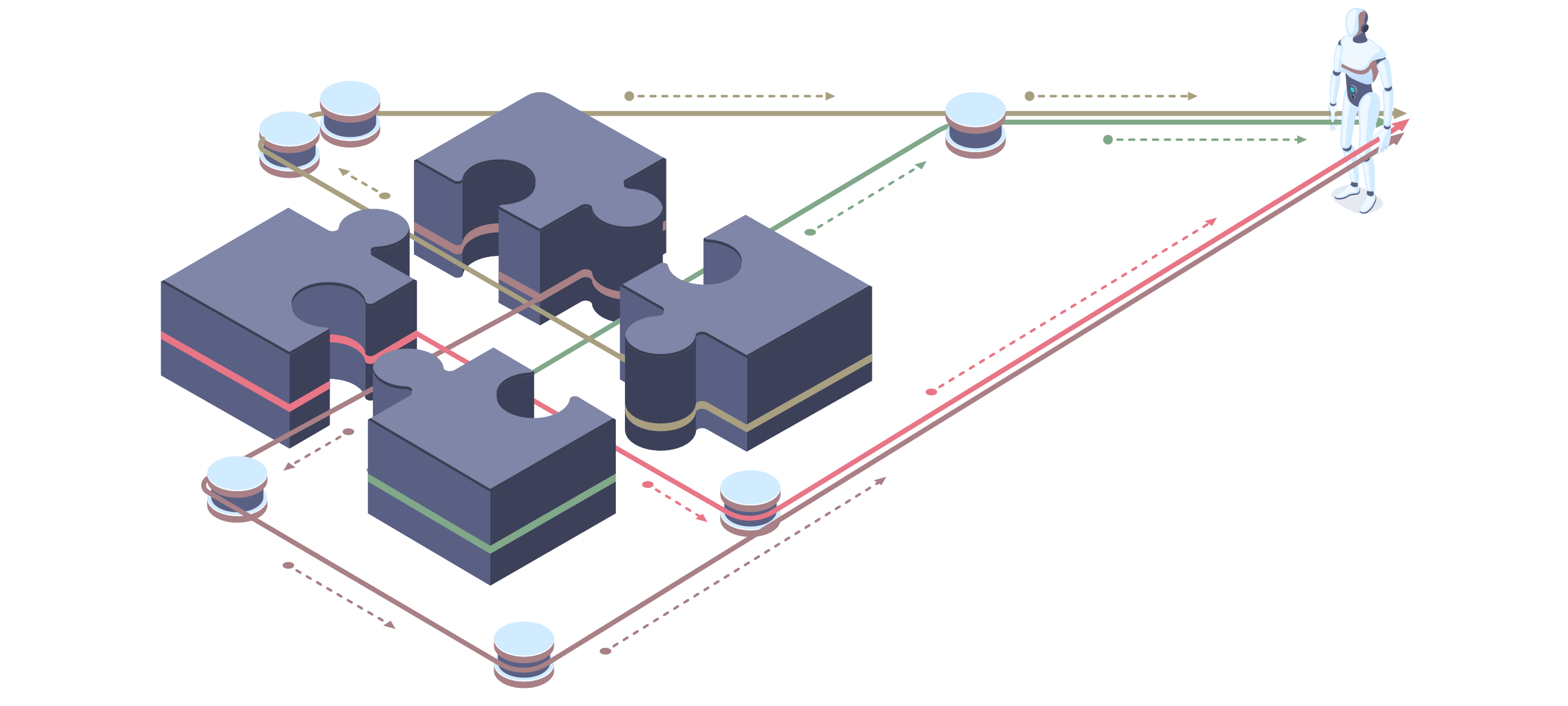
How Process Modernization Works
Four disciplines move process from tribal knowledge to a repeatable, automation-ready asset.
Re-Design & Re-Think
Start from the end goal, not the existing workflow. Define requirements for integrated, automation-ready processes before tooling decisions are made.

Process Analytics & KPIs
Instrument every process with business KPIs and cycle-time measurement, creating the evidence base for continuous, data-driven improvement.

Platform Integrations
Connect planning, deployment, and assurance platforms so work moves between systems without manual re-keying or handoff delay.

Communication Plan
Document and communicate processes so they are repeatable, auditable, and adopted across the organization — not held as tribal knowledge.
Process Innovation and Sustainability
Sustained process performance depends on five disciplines that carry the network from documented workflows toward closed-loop operations.
Process Management
Optimize workflows for efficiency. Remove redundant steps and handoffs to reduce cost and cycle time while protecting quality and compliance.
Orchestration
Automate and coordinate complex, multi-system processes — capital planning through site activation — so they execute consistently without manual intervention.
Catalog
A governed, organized view of services and products underpins accurate quoting, faster decisions, and dependable order-to-activation flow.
Simulation & Digital Twins
Model process and network changes against a digital twin before production — validating outcomes and de-risking innovation in a risk-free environment.
Measurement & KPIs
Tie process metrics to business outcomes so investment and prioritization decisions are evidence-based and aligned to strategic objectives.
Business Process Across the Arc
Tribal knowledge and spreadsheet workplans. Manual handoffs between teams. Process performance largely unmeasured.
Standardized, eTOM-aligned processes. Orchestration across integrated platforms. KPI dashboards in place and acted on.
Digital-twin-validated change. Closed-loop process optimization aligned to the ETSI Zero-touch Service Management architecture.
Network Data Intelligence
A trusted data foundation, intelligence built atop it, and the agentic foundations for action.
Network data is the foundation beneath the other two pillars, and that foundation has not changed: infrastructure produces the data, processes consume it, and nothing intelligent runs without it. Data originates at the radio and flows through every layer — RF performance, transport utilization, core signaling, and subscriber experience. Before any of it can drive a decision, it must be accurate, accessible to the teams and systems that need it, secure, and governed to regulatory standard.
Data alone does not operate a network. Intelligence is built atop the data — analytics and machine learning that turn it into prediction and insight, standardized through 3GPP's Network Data Analytics Function (NWDAF) and Management Data Analytics Service (MDAS). The emerging direction layers agentic operations on that intelligence: AI agents that decide and act within closed loops rather than only reporting. Agentic operation is not yet production reality at Tier-1 scale — but the foundations that make it safe, from grounded data to guardrails and human oversight, are decisions operators can make now.
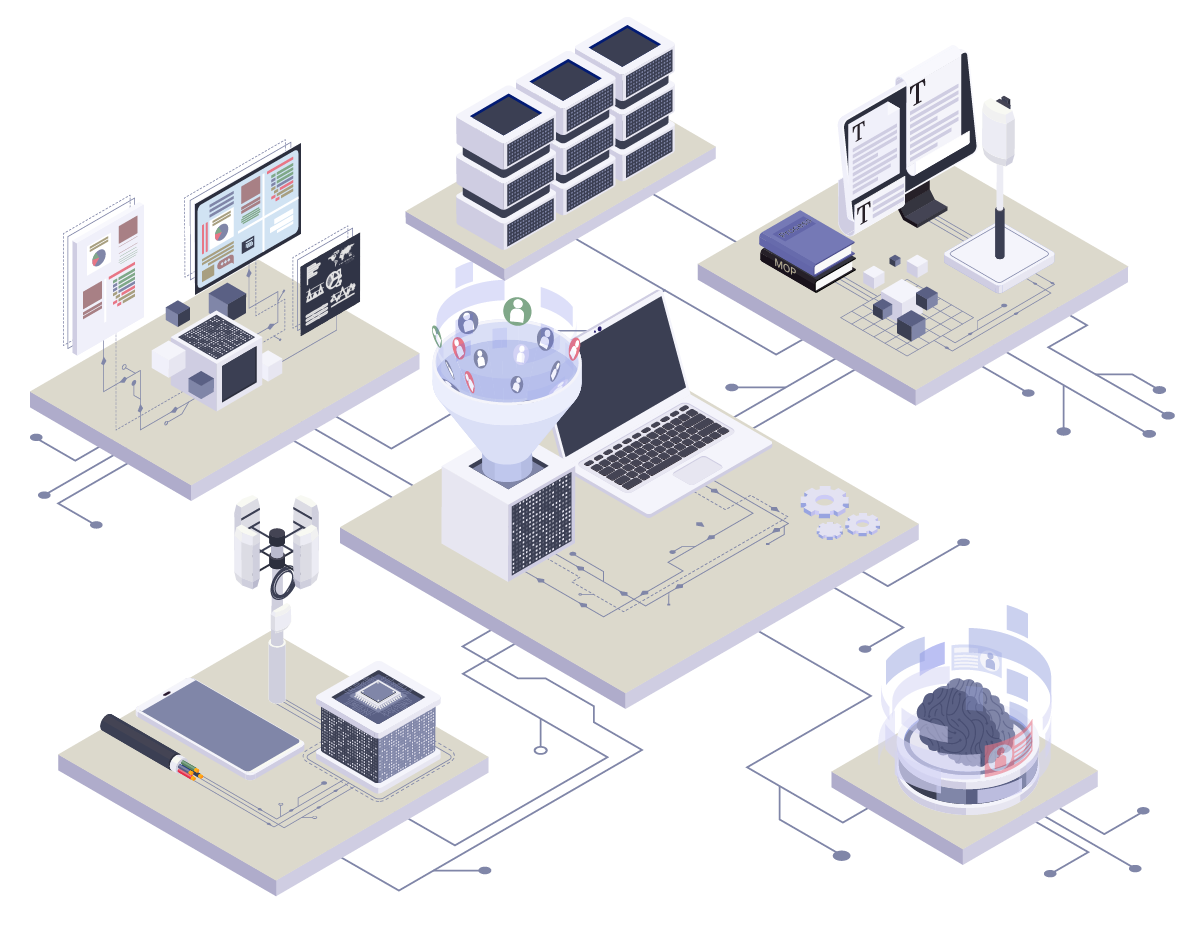
The Network Data Intelligence Stack
Three layers, each built on the one below: a trusted data foundation, the intelligence derived from it, and the agentic operations that act on it.
Trusted Data
The data aspect remains the precondition — and grows more important as more decisions are automated. Network data must be accurate, available, protected, and governed before anything can be built on it. This layer does not change; it carries more weight.
 Integrity
 Accessible
 Secure
 Governed
Intelligence
Analytics and machine learning turn trusted data into foresight — anomaly detection, capacity forecasting, quality-of-experience prediction, and automated root-cause analysis. NWDAF and management analytics standardize how this intelligence is produced and exposed. At this layer, systems recommend and humans decide.
Agentic Operations
Agentic operations layer action onto intelligence: AI agents that perceive, decide, and act within closed loops, pursuing declared intent rather than only surfacing insight — the target state TM Forum describes as Autonomous Networks Level 4. Production deployment at Tier-1 scale is nascent; operators should evaluate agentic operations first against well-scoped, reversible use cases.
Agentic Foundations
Five disciplines have to be in place before agents can be trusted to act on a production network.
Grounded Data
Agents act only on verified, real-time data. The Layer 1 foundation is what keeps agent decisions grounded in network reality rather than speculative.
Guardrails & Policy
Bounded action spaces and explicit policy define what an agent may change, by how much, and the conditions under which it must stop and escalate.
Observability & Explainability
Every agent decision is logged, traceable, and explainable, so operators can audit why an action was taken and intervene with confidence.
Human-in-the-Loop
Humans supervise continuously and approve or override exceptions, with clear escalation paths — the oversight model behind Autonomous Networks Level 4.
Intent & Safe Closed Loops
Agents pursue declared intent through sense, analyze, decide, and act loops aligned to ETSI Zero-touch Service Management, reverting to a safe state when confidence is low.
Network Data Intelligence Across the Arc
Counters siloed per domain. Manual extracts and static reports. The data exists; intelligence does not.
A consolidated, governed data fabric feeding analytics and machine learning. Intelligence predicts and recommends; humans decide.
Agents act on grounded data within guardrails, under human oversight — closed-loop operations at Autonomous Networks Level 4.
Frameworks referenced across these pillars: 3GPP (5G Core Service-Based Architecture, NWDAF, MDAS), TM Forum (eTOM, Autonomous Networks maturity L0–L5), ETSI (Zero-touch Service Management), the OCUDU Ecosystem Foundation (open CU/DU implementation), and CAMARA network APIs. Autonomous Networks maturity levels follow the TM Forum framework; Level 4 — closed-loop, cross-domain operations with human oversight on exceptions — is the strategic target.